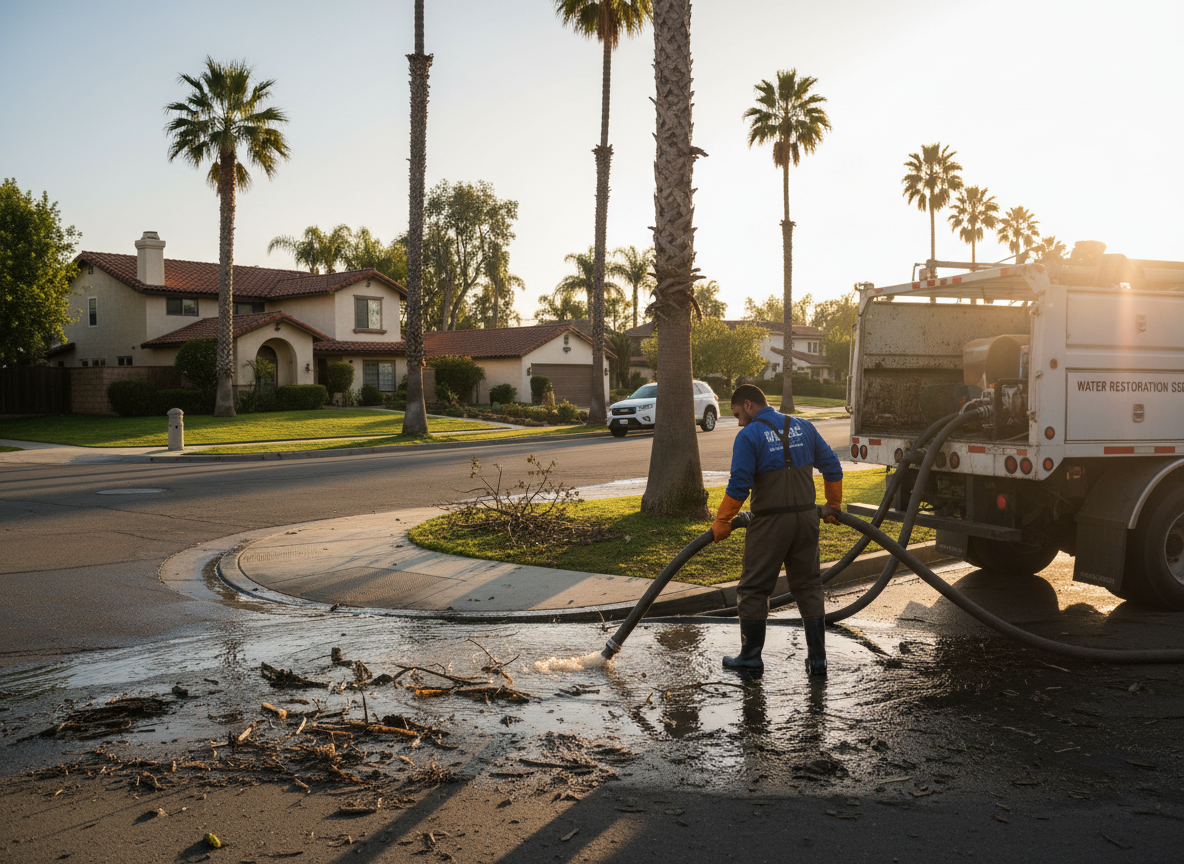
Doria sits along the older residential pockets off El Toro Road in Lake Forest, where many homes date to the 1970s and 1980s with slab-on-grade foundations and minimal crawlspace access. When a supply line bursts or a roof leak hits during winter rains, water travels quickly under tile or carpet because the flat lots and compacted soil limit natural drainage. Our crews based at 23591 El Toro Rd reach these streets within minutes, bringing extraction equipment sized for the tight side-yard access common on Doria cul-de-sacs.
Heavy rain events in the El Toro area often send runoff from the nearby hills toward lower Doria blocks, saturating backyards and pushing moisture into garage slabs and laundry rooms. We map moisture with thermal cameras before cutting drywall, then use directed drying so homeowners on streets like those near Serrano Creek Trail can stay in place while work continues. The 24/7 line lets us start pumps the same hour the call comes in, before secondary damage sets into the older stucco walls typical here.
Because Doria backs up to established neighborhoods with mature landscaping, our techs watch for hidden irrigation breaks that feed water under patios. Every job includes a written drying plan and daily moisture logs so insurance adjusters see exactly what was affected on that specific property.
Around Doria
We regularly work near:
- 📍El Toro Road
- 📍Serrano Creek Trail
- 📍Heritage Hills Park
- 📍Serrano Elementary School
- 📍Doria Court
Water Damage Restoration El Toro in Doria — Local Notes
- •Doria lots often feature narrow side yards and mature trees that block standard truck access, so we stage equipment on El Toro Road and run hoses through gates.
- •Many 1970s-80s slab homes here have post-tension cables; we locate them with GPR before any floor removal to avoid structural issues.
- •Winter storms send hill runoff straight into lower Doria backyards, requiring perimeter trenching before interior drying begins.
- •Older galvanized plumbing common on these blocks fails at the slab penetration, so we always inspect the full line rather than just the visible wet spot.