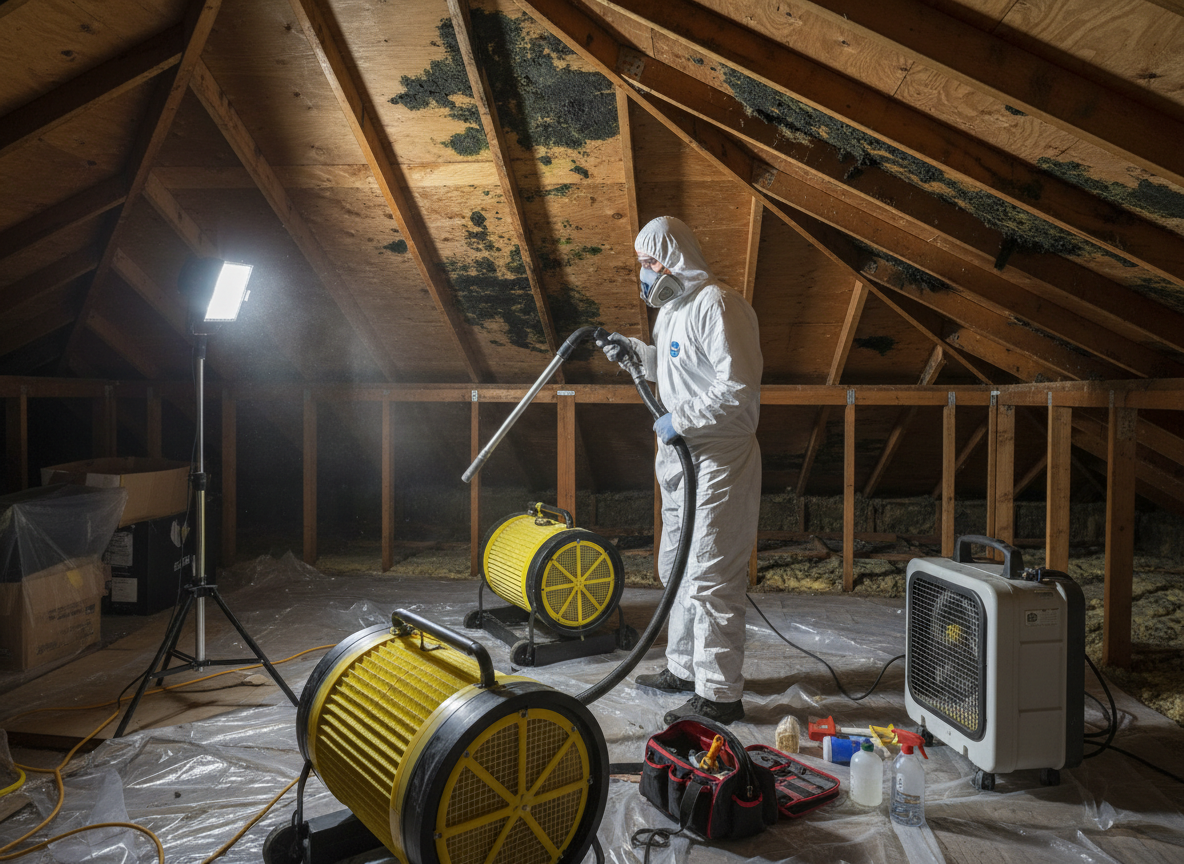
Attics in El Toro and Lake Forest homes built from the 1970s onward often trap moisture when roof underlayment fails during winter rains. Once water enters through compromised flashing or aged shingles, it soaks insulation and roof sheathing, creating conditions for mold within 48 hours. Technicians must map every rafter bay because mold frequently hides behind insulation batts that appear dry on the surface. Removing and disposing of contaminated material requires negative air machines and sealed chutes to prevent spores from drifting into living spaces below.
California building codes require proper attic ventilation ratios, yet many older El Toro properties have blocked soffit vents or undersized ridge vents that worsen humidity after storms. When mold remediation crews open ceilings for access, they document existing insulation depth and any knob-and-tube wiring that could complicate drying. Post-removal verification includes moisture meter readings on all wooden members and thermal imaging to confirm no residual dampness remains in hard-to-reach corners near the eaves.
Homeowners sometimes attempt DIY bleach sprays, but these only address surface growth while leaving roots in porous wood. Professional remediation includes HEPA vacuuming of rafters followed by application of EPA-registered antimicrobials that penetrate the grain. Final clearance testing ensures spore counts return to outdoor baseline levels before insulation is replaced, preventing repeat outbreaks during the next Santa Ana wind-driven rain event.
Technician insight
In El Toro the thing that catches most people out with attic mold remediation is the way 1970s tract homes have shallow roof pitches and minimal ridge venting. Winter rains pool along the eaves where insulation meets the top plate, and homeowners never notice until the smell reaches the bedrooms below. Once we pull the insulation we often find the mold has already crossed into the wall cavities because the original builders skipped baffles.
Hidden Eave Mold After Winter Leak
A Lake Forest resident reported a musty odor in upstairs bedrooms following heavy January rains. Inspection revealed water tracking along the north eaves of a 1978 home where soffit vents were blocked by insulation. We removed 180 square feet of saturated batts, treated the rafters, and confirmed drying before reinstalling insulation. The homeowner reported no recurrence after the next storm cycle.
How it works
- 1
Initial Assessment
Technicians arrive within hours, inspect the attic from the access point, and use moisture meters plus borescopes to locate hidden water intrusion without disturbing insulation yet.
- 2
Containment Setup
Plastic sheeting and negative air machines isolate the attic from the rest of the house while protecting HVAC returns that could spread spores through the Lake Forest home.
- 3
Material Removal
Wet insulation, affected drywall returns, and mold-colonized wood are cut out and bagged for disposal following local landfill rules for construction debris.
- 4
Drying and Treatment
Air movers and dehumidifiers dry the structure, then EPA-registered antimicrobials are applied to rafters and sheathing before new insulation is installed.
Pricing
Pricing varies by square footage of affected attic space, depth of insulation removal required, and whether roof repairs must be coordinated before remediation finishes.