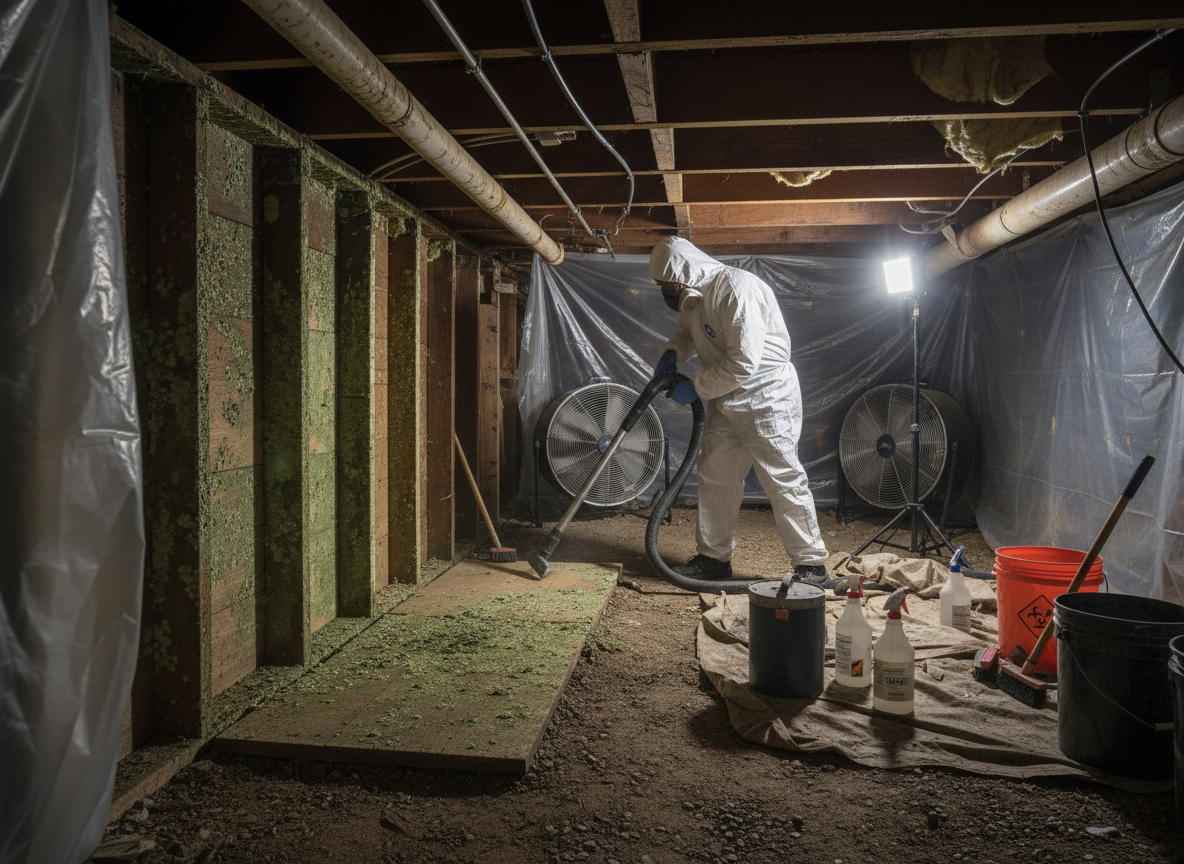
Crawl spaces in El Toro homes often sit above soil that retains winter moisture, allowing mold to take hold on joists and insulation once temperatures drop. We begin every job with a full visual and moisture meter inspection to locate hidden growth behind vapor barriers or along foundation walls. Containment barriers and negative air machines keep spores from migrating into living areas during removal.
Many properties near El Toro Road were built in the 1970s and 1980s with minimal ventilation, so we frequently replace saturated insulation and treat wood with EPA-registered antimicrobials before installing new vapor barriers. Standing water from occasional heavy rains can also reach these spaces through grading issues common in the flat terrain around Lake Forest. We always document conditions with photos for the homeowner before any work starts.
After removal we focus on drying the space with commercial dehumidifiers sized for the square footage, then recommend sealing vents and improving drainage to reduce future risk. Homeowners in the area sometimes attempt bleach cleaning themselves, which fails to address the root moisture source and can damage structural lumber. Our process leaves the crawl space dry and sealed so the home stays protected year-round.
Technician insight
In El Toro, the thing that catches most people out with crawl space mold removal is how many 1970s and 1980s homes along El Toro Road have crawl spaces with almost no cross-ventilation and soil that stays damp well into spring, letting mold hide until it reaches the subfloor.
Hidden Mold After Winter Rains
A Lake Forest homeowner noticed a musty odor in the hallway. Inspection revealed mold on joists in the crawl space fed by slow drainage from the flat lot. We contained the space, removed affected insulation, treated the wood, and installed a new vapor barrier. The home stayed dry through the next rainy season.
How it works
- 1
Inspection and Assessment
We enter the crawl space through existing access points, measure moisture levels on wood and soil, and identify all visible mold growth plus any plumbing or grading issues contributing to the problem.
- 2
Containment Setup
Plastic sheeting and negative air machines isolate the crawl space from the rest of the home to prevent spore spread during cleaning.
- 3
Mold Removal and Treatment
Affected insulation is removed, wood surfaces are cleaned and treated, and any standing water is extracted before the space is dried with commercial equipment.
- 4
Prevention and Final Check
New vapor barrier is installed where needed, vents are evaluated, and a final moisture reading confirms the space is dry before we leave.
Pricing
Cost depends on square footage, depth of mold, and access difficulty; we provide an upfront quote after inspection.