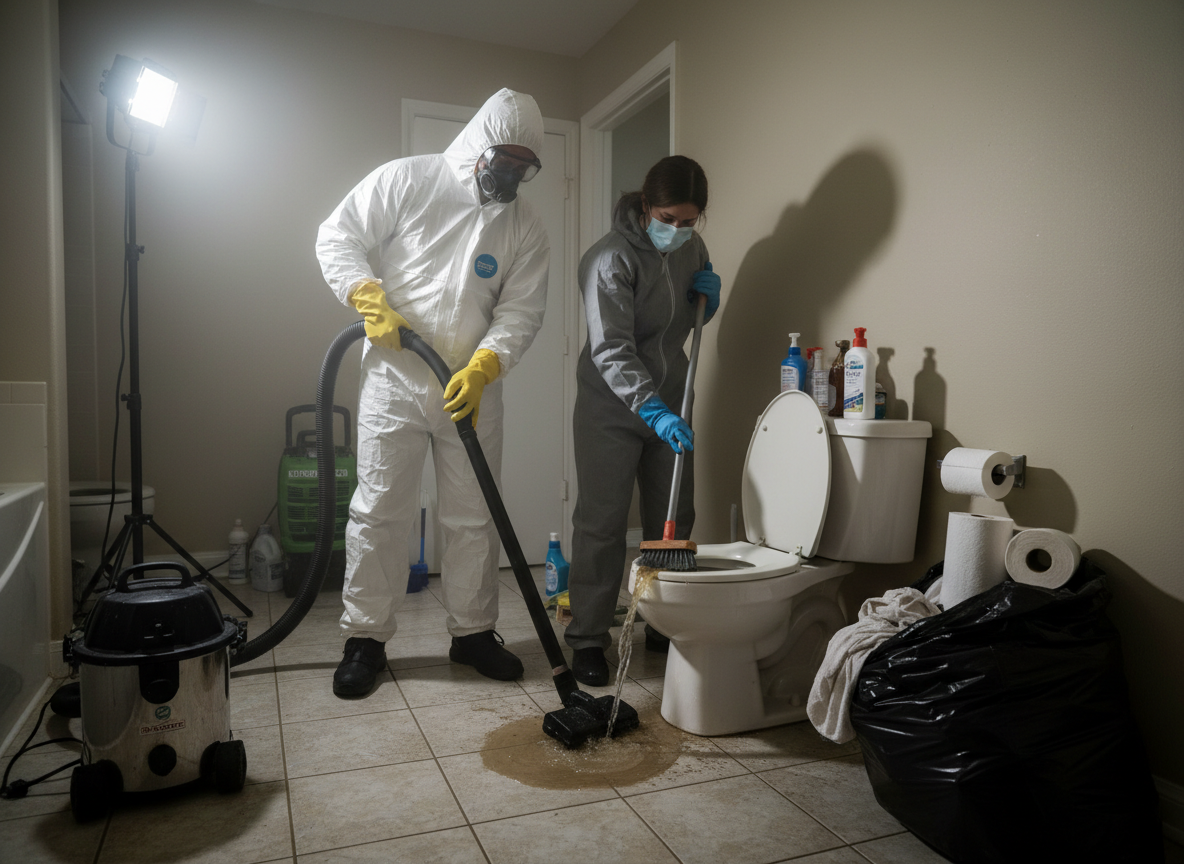
Toilet overflows in El Toro homes often reach subflooring and base cabinets before homeowners notice, especially in single-story ranch houses common along El Toro Road. Water migrates under vinyl or tile, wicking into drywall and creating hidden mold colonies within 48 hours. Technicians pull baseboards, use moisture meters on the slab, and apply negative air to prevent spores from traveling through HVAC returns typical in these 1970s-era builds.
Standing water from a second-floor bath can travel down interior walls and pool above the garage ceiling, a frequent path in Lake Forest hillside properties. Extraction must include removing the toilet to access the wax ring seal and checking the soil stack for cracks. Antimicrobial treatment follows, followed by targeted drying with air movers aimed at the joist bays rather than open rooms.
El Toro's clay-heavy soil and occasional winter rains increase hydrostatic pressure on older sewer laterals, turning a simple overflow into a recurring issue if the line is not scoped. Crews document every step with photos for insurance adjusters and leave the site with dehumidifiers running on a 24-hour monitor cycle until readings drop below 12 percent moisture content.
Homeowners sometimes attempt DIY extraction with shop vacs, pushing contaminated water deeper into carpet padding or under cabinets. Professional crews instead use truck-mounted units that pull 300+ CFM and contain waste for proper disposal, avoiding cross-contamination between the bathroom and living areas.
Technician insight
In El Toro the thing that catches most people out with toilet overflow cleanup is how quickly water travels under the slab edge in homes built on the old ranch land near the 5 freeway; once it hits that compacted fill, you have to pull more baseboard than the homeowner expects or the moisture just sits there.
Overflow into adjacent bedroom
A toilet overflow in a Lake Forest home near El Toro Road sent water under the wall into the master bedroom carpet. We found saturation extending four feet past the shared wall and into the closet base. Extraction, wall drying, and carpet pad removal were completed the same day; the homeowner was back in the room within 72 hours.
How it works
- 1
Arrival and Containment
Technicians arrive within the hour, set up containment barriers, and stop the source at the toilet flange.
- 2
Water Extraction
Truck-mounted equipment removes standing water from floors, walls, and any affected subflooring.
- 3
Moisture Mapping
Infrared cameras and meters locate hidden moisture in drywall, cabinets, and slab edges.
- 4
Drying and Monitoring
Air movers and dehumidifiers run until all materials reach dry standard, with daily readings logged.
- 5
Sanitization and Final Check
Antimicrobial application and final inspection ensure no residual odor or moisture remains.
Pricing
Cost depends on square footage affected, number of rooms, and whether subfloor or drywall removal is required.